
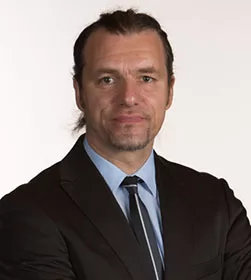
As the new football season approaches, Gibraltar Wave FC is taking a major step forward in formalizing its internal safeguarding structure. With a long-standing commitment to player welfare and best practices, the club has appointed its Managing Director, Heiko Mock, as the interim Safeguarding Officer. Though the dual role isn’t standard, Heiko’s extensive work in safeguarding—bolstered by five FIFA certificates and active involvement in the European Club Association (ECA)—makes him uniquely suited to lead this initiative during its crucial launch phase. Heiko has been championing safeguarding protocols behind the scenes for years. Now, with new contracts being signed and staff onboarding in full swing, the club is ready to move forward with a structured and transparent safeguarding process. We sat down with Heiko to discuss his appointment, his vision, and why now is the right time to push safeguarding to the front of the agenda.
Gibraltar Wave (GW): Heiko, first of all, congratulations on your new interim role. How does it feel to formally take on the safeguarding responsibilities at Gibraltar Wave?
Heiko Mock (HM): Thank you. It’s a big responsibility, but one I take on with conviction and commitment. Safeguarding has been a passion project for me over the past years, and I’m grateful for the board’s trust in allowing me to launch this process properly. It’s about building something that protects the very foundation of our club—our people.
GW: You’ve been working on establishing safeguarding processes at the club for quite some time now. Why do you think this is the right moment to formally implement the structure?
HM: Timing is crucial. With staff contracts ending and new appointments being made, the start of the season gives us a natural point of transition. It’s the perfect moment to integrate safeguarding into our hiring and onboarding processes without disruption.
GW: Your role as Managing Director puts you at the helm of many operations. How do you plan to maintain the neutrality and independence expected from a Safeguarding Officer?
HM: That’s a very fair question. While this role is ideally separate from executive leadership, I’ve shown in past situations that I can act objectively and put the club’s best interests first, even when they’re uncomfortable. I will always prioritize safeguarding above hierarchy or convenience—and this interim setup is only temporary until we identify a permanent officer.
GW: You currently hold five FIFA safeguarding certificates, the first of which you earned in 2021. Can you tell us a bit about what those courses covered and how they’ve shaped your approach?
HM: The courses ranged from foundational safeguarding principles to more advanced case management and preventive strategies. They emphasized everything from child protection to reporting procedures and interview techniques. The biggest takeaway for me has been the importance of creating a safe environment proactively—not just reacting to issues when they arise.
GW: Many football associations around the world still don’t treat safeguarding as a priority. Why do you think that is, and how does it impact clubs like ours?
HM: Often it’s due to a lack of awareness, cultural taboos, or limited resources. Unfortunately, many still see safeguarding as a “compliance” issue rather than a moral one. For clubs like ours, it means we have to lead by example rather than wait for the system to catch up.
GW: In the UK, safeguarding is a mandatory part of club licensing. Do you see Gibraltar moving in that direction, or will it be down to the clubs to lead the way?
HM: Currently, it’s very much up to the clubs in Gibraltar. The FA requires safeguarding certificates for coaches, which is a start, but not enough. I hope we can inspire wider reform by showing what a robust safeguarding process looks like from within a club.
GW: In Gibraltar, coaches are required to have a safeguarding certificate—but as you’ve pointed out, that doesn’t equal a full safeguarding process. What more is needed?
HM: A certificate is like having a driving license—it means you’re qualified, but it doesn’t mean you always drive responsibly. We need protocols, reporting channels, follow-ups, background checks, and above all, a culture that encourages openness and trust.
GW: Can you walk us through what a proper safeguarding process within a club actually involves?
HM: It starts with safe recruitment—video-recorded interviews, police vetting, and background checks. Then, training and education for staff and players. There must be clear policies and procedures, a reporting structure, and most importantly, someone who monitors it independently. Regular audits and reviews keep the system accountable.
GW: You mentioned earlier that all new staff members will now go through video-recorded interviews and police vetting. Why are these steps essential?
HM: Because safeguarding starts before someone joins the club. The video recordings give us an extra layer of accountability, and the police vetting—through the Gibraltar Police vetting form—ensures transparency and safety from the very beginning.
GW: What challenges do you foresee in implementing this process within a smaller club like Gibraltar Wave, especially with limited resources?
HM: Time and manpower. Smaller clubs often rely on volunteers or stretched staff. It means we must be pragmatic—streamlining processes where possible, leveraging partnerships, and making safeguarding part of our culture, not just a checklist.
GW: You’ve visited other clubs for insights, including Brighton & Hove Albion. What impressed you most during your visit to their safeguarding department?
HM: Their integration of safeguarding into every aspect of the club. It wasn’t just a department—it was part of the DNA. I was particularly impressed by how even senior staff were involved in safeguarding training and how youth players were empowered to speak up.
GW: How important is the relationship with clubs like Brighton in helping Gibraltar Wave grow and adopt international best practices?
HM: It’s incredibly important. Learning from experienced clubs gives us a shortcut to quality. Our management-level relationship with Brighton allows us to exchange knowledge, templates, and strategies that would take years to develop on our own.
GW: What role does the European Club Association (ECA) play in promoting safeguarding across Europe, and how have you contributed to this effort?
HM: The ECA is doing important work to create unified standards across Europe. I’ve been active in discussions about club-level safeguarding services It’s a community effort.
GW: What are some misconceptions people have about safeguarding in football, especially at the club level?
HM: That it’s only about protecting children, or only about preventing abuse. Safeguarding is much broader—it includes mental health, equality, bullying, and creating a respectful environment for everyone, including staff. It is not only for protecting children, but also boys, men and female players and staff.
GW: How do you plan to educate the rest of the Gibraltar Wave community—players, staff, and parents—about safeguarding policies and their importance?
HM: Through workshops, information sessions, and clear communication. We’ll also publish easy-to-understand guides and set up a dedicated safeguarding section on our website, so everyone knows where to go and what to do. But this takes time.
GW: Are there any specific challenges when it comes to safeguarding in women’s football that you’re keeping in mind as you implement this structure?
HM: Absolutely. Power dynamics, underrepresentation of female staff, and sometimes the assumption that safeguarding isn’t as necessary in women’s football are all issues. We’re especially focused on ensuring our female athletes feel safe, heard, and respected at all times.
GW: You mentioned earlier that the process will include “detailed and challenging interviews.” What kind of red flags are you looking for, and how do you balance privacy with safety?
HM: We look for inconsistencies, evasiveness, or lack of understanding about women and player welfare. The balance comes through transparency—we inform candidates about the process and why it’s necessary. It’s never personal; it’s professional due diligence.
GW: How do you see this process evolving over the next year? Will we see the appointment of a full-time, independent Safeguarding Officer in the future?
HM: That’s the goal. This interim period allows us to build the foundations and test the system. Eventually, we want an independent officer who is fully trained and focused solely on safeguarding. We’ll begin recruiting for that role once the system is firmly in place.
GW: What advice would you give to other clubs—especially small or semi-professional ones—that are looking to begin their own safeguarding journey?
HM: Start small but start now. Even basic steps—clear contact points, training sessions, or using free FIFA or UEFA resources—can make a difference. Build from there. Don’t wait for an incident to happen to take action.
GW: What was the biggest challenge in convincing the board to implement a formal safeguarding process at Gibraltar Wave, and how did you overcome it? Can you give us a detailed answer please?
HM: That’s an excellent and very important question—and honestly, it wasn’t easy in the beginning. One of the main challenges was shifting the mindset. Many people believed that simply asking someone to complete a basic safeguarding certificate or online course was enough.
There’s a kind of informal trust culture in small environments like Gibraltar, where professional vetting is often replaced by asking around. But that’s not safeguarding. That’s assumption.
We’ve seen countless examples in the media—cases where people didn’t believe accusations because the person “seemed nice.” And then, when the truth came out, everyone said the same thing: “But he was such a nice guy…” or “He is so famous, he doesn’t need to do that..”. OK this is on a different level when we talk about celebrities or maybe even professional athletes or coaches. But that’s precisely the risk we have to avoid.
A concrete example that helped change minds was when we held our first formal safeguarding session with a coaching candidate. We did the background checks, conducted a structured interview, and had a friendly, transparent discussion with video documentation. It was professional, but also very human. The candidate appreciated it—and so did the board.
I had invited the entire board to sit in—not to participate, but just to observe. And something clicked. They saw the value, the clarity, and the professionalism in the process. After that session, they not only supported the process—they started coming up with their own ideas on how to improve it further.
That moment proved that safeguarding doesn’t create barriers—it creates confidence. Confidence for the club, the staff, and for those we’re meant to protect. That shift in perception was the turning point.
GW: Lastly, what do you hope your legacy will be when it comes to safeguarding at Gibraltar Wave FC?
HM: I hope people will say, “That’s the club where safeguarding really means something.” I want to leave behind a structure that endures, a culture that protects, and a team that feels empowered and safe. If we achieve that, it’ll be one of my proudest contributions to the club.





Comments
0